Team
Built by the people behind the research

Dr. Diego Granziol
Co-founder & CEO

Khurshid Juraev
Co-founder & CTO

Prof. Jon Keating
Chairman
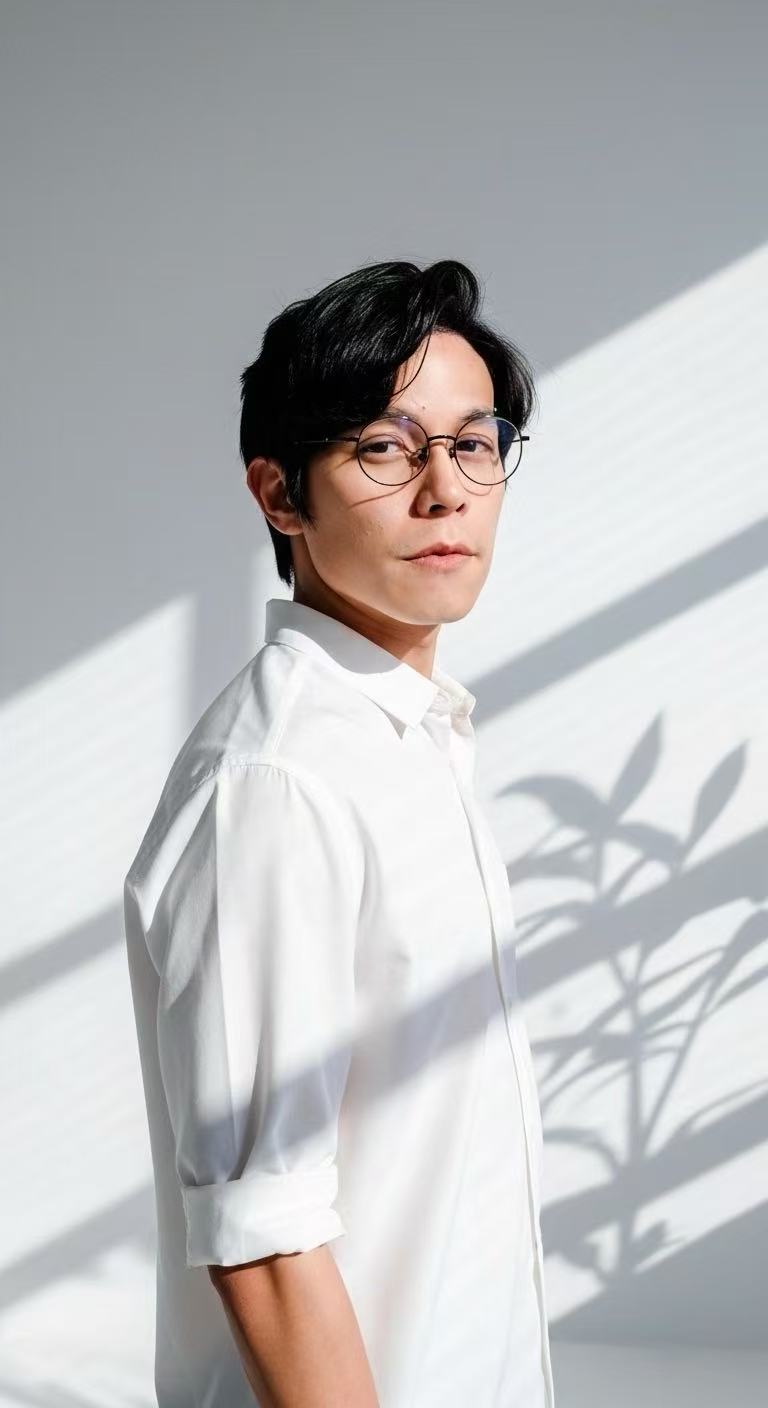
Oscar Wang
Head of Sales, Asia Pacific

Stephen Lin
Head of Business Development, Asia Pacific
Quantisation as a Service: we bring open-source models from 16-bit to 3-bit — losslessly. Send us any checkpoint, get back a model that matches its benchmarks at a fraction of the memory and serving cost.
Models are growing 10x faster than hardware is getting cheaper.
The bottleneck isn't compute — it's memory.
Current heuristic methods fail to exploit the best memory-aware representations — leaving performance and cost savings on the table.
Treating every layer the same wastes precision on easy parts and destroys the hard ones.
The best AI models are too large for most hardware. Memory is the real bottleneck.
Push compression too far and quality drops off a cliff. There's a smarter way to reach the same size.
Same benchmarks. Same behaviour. Lossless — at a fraction of the size.
import invariant

model = invariant.load("meta-llama/Llama-3-70B")
compressed = model.compile(target_bits=4.0)
Quantisation as a Service: three lines of code — or just send us the checkpoint.
We probe the loss landscape to discover which parts of the model are fragile and which are robust.
Sensitive layers get more bits. Robust layers get fewer. The total size stays the same — the quality goes up.
After compressing, we use the sensitivity map to fix the remaining distortion — eliminating cascading errors.
Search HuggingFace for someone who already ran a heuristic quantization. Hope the settings are reasonable.
Evaluate whether it still meets your task requirements and memory constraints. Usually it doesn't.
Manually tweak parameters, re-run, re-evaluate. Repeat until something is acceptable.
After days of iteration you have "good enough" — with no proof it's optimal.
Benchmarked against the best compression methods available today.
Flower Forest Intelligence, Higgsfield AI and Oxford University trust Invariant to take their models from 16-bit to 3-bit — losslessly.
Hangzhou, China
Almaty, Kazakhstan
Oxford, United Kingdom
Some layers sit on steep ridges in the loss landscape — even tiny changes cause big quality drops. Others sit in flat valleys where you can compress aggressively with no consequence.
We measure this curvature directly, then use it to decide where every bit of precision should go. The result: models that are dramatically smaller but behave almost identically to the original.
Co-founder & CEO
Co-founder & CTO
Chairman
Head of Sales, Asia Pacific
Head of Business Development, Asia Pacific
Stop paying 16-bit prices for 16-bit memory. Quantisation as a Service — production-ready in days, not quarters.